
Name-Based Case Searches
Begin with the likely court. Per the Texas Judicial Branch record FAQ, no one portal gathers every trial case in Texas. The Floyd County District Clerk keeps district civil, family, criminal, and child-protection records. Constitutional County Court matters land with the County Clerk instead. Justice and municipal cases stay put in those courts. One name pulled across separate systems can easily give false matches. So add public caption details, a rough filing year, and a case category. The statewide guide points to four tabs. Cases, Filings, Text, and Hearings each narrow a court docket lookup.
- Identify the likely Floyd County court and case type.
- Open re:SearchTX for covered records, or contact the local clerk.
- Enter the available name and narrow by court, type, or date.
- Open the case description and confirm the identifier with the custodian.
| Field | Type | Required | Use |
|---|---|---|---|
| Name or caption | Text | When known | Finds likely public matches |
| Court | Filter | Advised | Separates local custodians |
| Case type | Filter | No | Narrows the record category |
| Date range | Date | No | Limits available filing or event dates |
Floyd County re:SearchTX Tabs
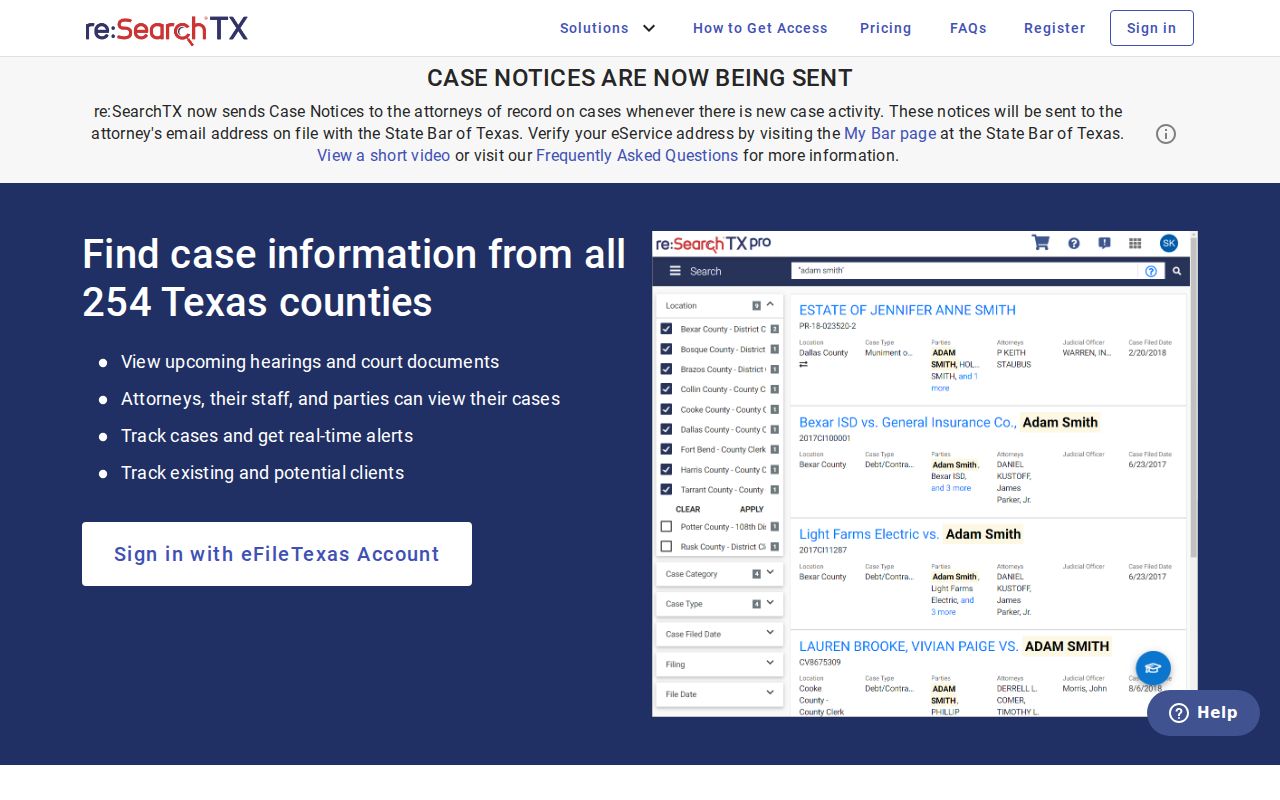
re:SearchTX is the statewide electronic layer for court records. Its quick guide covers a lot of ground. It walks through case descriptions, Case Details, filing details, hearing dialogs, saved searches, and exports. Expect to register or sign in through eFileTexas. The tools can help you locate a Floyd County docket. Coverage, though, shifts with each court's integration and record type. The entry screen is where covered searches begin.
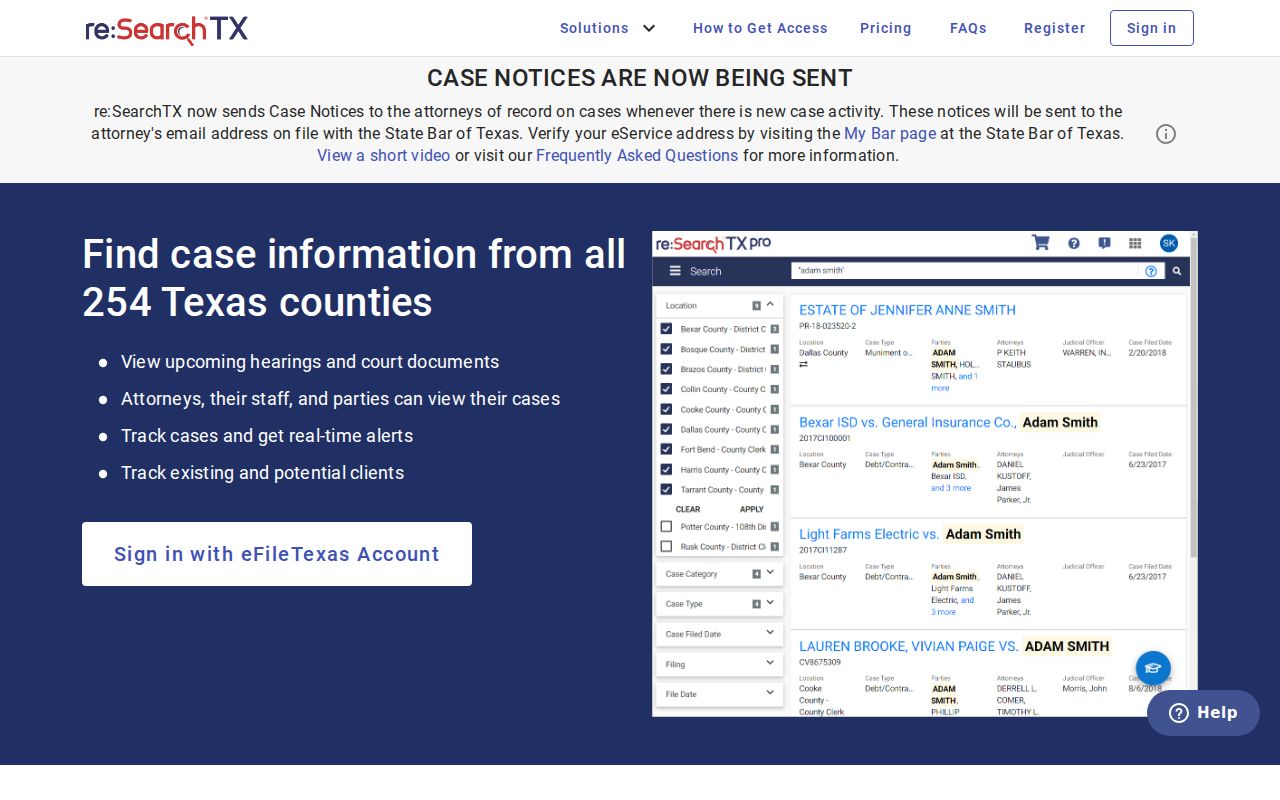
A hit is not the whole story. Floyd County history may be incomplete, some documents may cost money or be withheld by law, and a match only counts once the court name, cause number, and date line up.
Case Number Searches
The District Clerk's number rule is exact. Type the cause number with no comma and no hyphen. That means 10731, never 10,731. A suffix, when one exists, stays attached. A related matter might read 10731A, and a pending tax case could be 5806TS. This format belongs only to the local District Clerk system. Never force it onto a JP, municipal, appellate, or federal number. If a good number still fails, the Floyd County District Clerk says to call (806) 983-4923. The office will check the format, court, or route.
Search key: remove punctuation from a Floyd district number, but preserve a known suffix.
No Universal Floyd County Portal
No single Floyd County search covers every court. One docket query cannot span every bench at once. It cannot reach the 110th District Court, the constitutional County Court, four JP places, and two municipal courts together. You pick the court first, then the office that holds its records. That is just how the docket system here is built.
For district cases, go to the District Clerk. The office sits in Room 207 at 105 South Main Street in Floydada. County Court files sit with the County Clerk instead. The JP offices are split, some in Floydada and some in Lockney. Each city keeps its own municipal records. Appeals follow a separate route entirely. The official appellate contact material illustrates that shift.
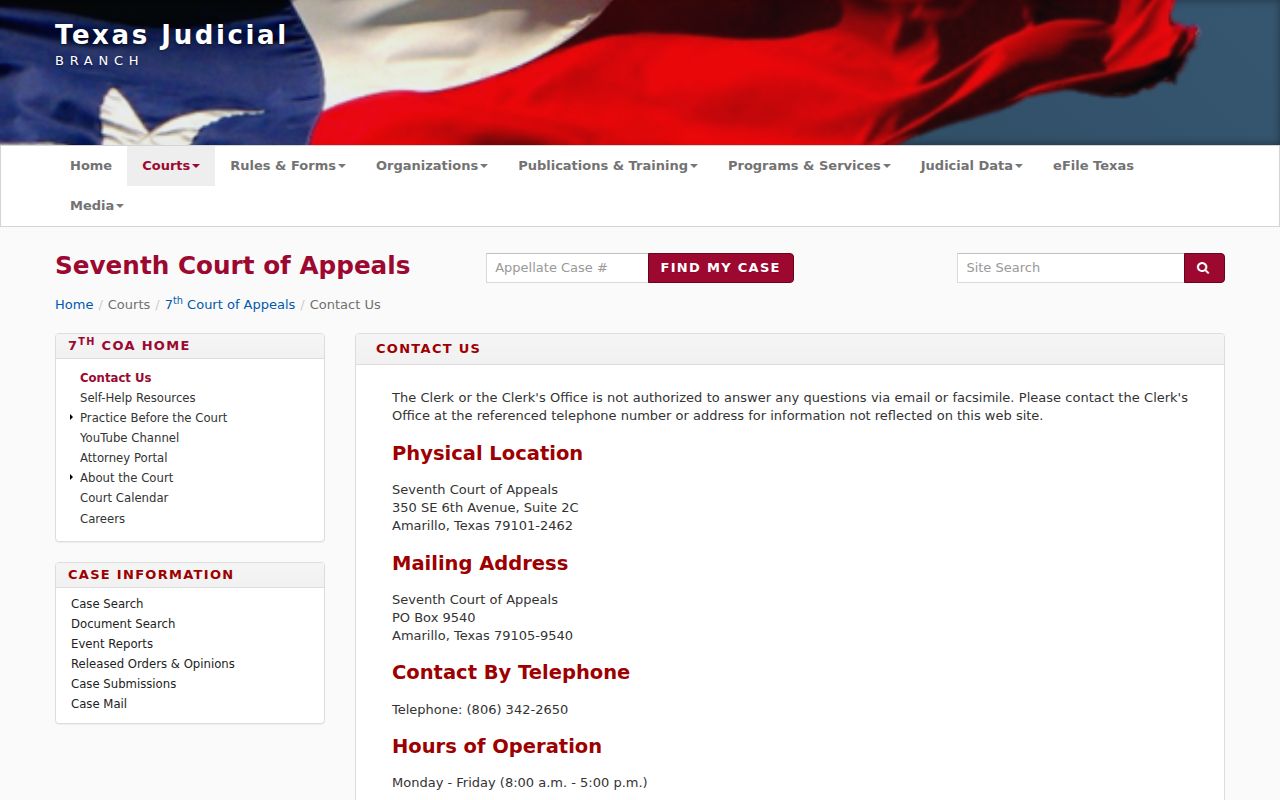
Federal cases run through PACER and the Northern District of Texas. So one event can spawn records at several court levels.
The 110th District Court covers Floyd, Briscoe, Dickens, and Motley counties. That spread makes the county filter and the local cause number doubly useful. A caption reading "110th District Court" alone proves nothing. It does not prove Floyd County is the filing county. Check the county named in the record. Take Floyd files only to Floyd's District Clerk. A Floyd appeal can move up to the Seventh Court of Appeals in Amarillo. There the appellate clerk opens a fresh docket.
Case Search Results Explained
Think of a result as an index to the court record, not the full file. A covered Floyd County case may display a number, a description, the court, filings, or hearing detail. The docket also captures motions, orders, service events, and a disposition. When wording controls, read the filed order itself.
| Cause number | The court identifier, including a meaningful Floyd suffix. |
|---|---|
| Case style | The official caption, subject to redaction. |
| Case type | The category and court route. |
| Filing detail | A filed item and date; exhibits may share one PDF. |
| Hearing detail | A setting type and date when available. |
| Status | System shorthand that should be checked against the latest order. |
A docket entry proves an event was recorded, nothing more. It will not reproduce every document, so use the Floyd County court case records route to request the filing behind an entry.
Floyd County Filing Trail
Why might a filing row not match the visible files one-to-one? The local e-filing FAQ explains. A lead document plus attachments works like a paper pleading with exhibits. The integrated system can merge them into a single accepted PDF. File-marked documents go up as separate lead documents. Proposed orders carry their own lead-document code. The official search interface ties the case, filing, and hearing layers together.
Once a filing is accepted, the FAQ says the filer cannot just alter the document or tack on an attachment. Amendments go back through resubmission, so one issue can leave several docket events behind.
Two Ways to Search: County and State
Try re:SearchTX when a covered electronic case might exist. Go to the Floyd County clerk for definitive confirmation, old files, copy questions, or a result that came up empty. The County Clerk links an external "Online Records Search," but treat it as a lead rather than proof of County Court coverage.
| Point | Statewide layer | Floyd custodian |
|---|---|---|
| Best use | Covered cases, filings, and hearings | A known local file or direct request |
| Coverage | Varies by integration | Records held by that office |
| Missing result | May reflect limits | Clerk can check format and court |
| Copies | Current electronic terms apply | Ask for plain or certified copies |
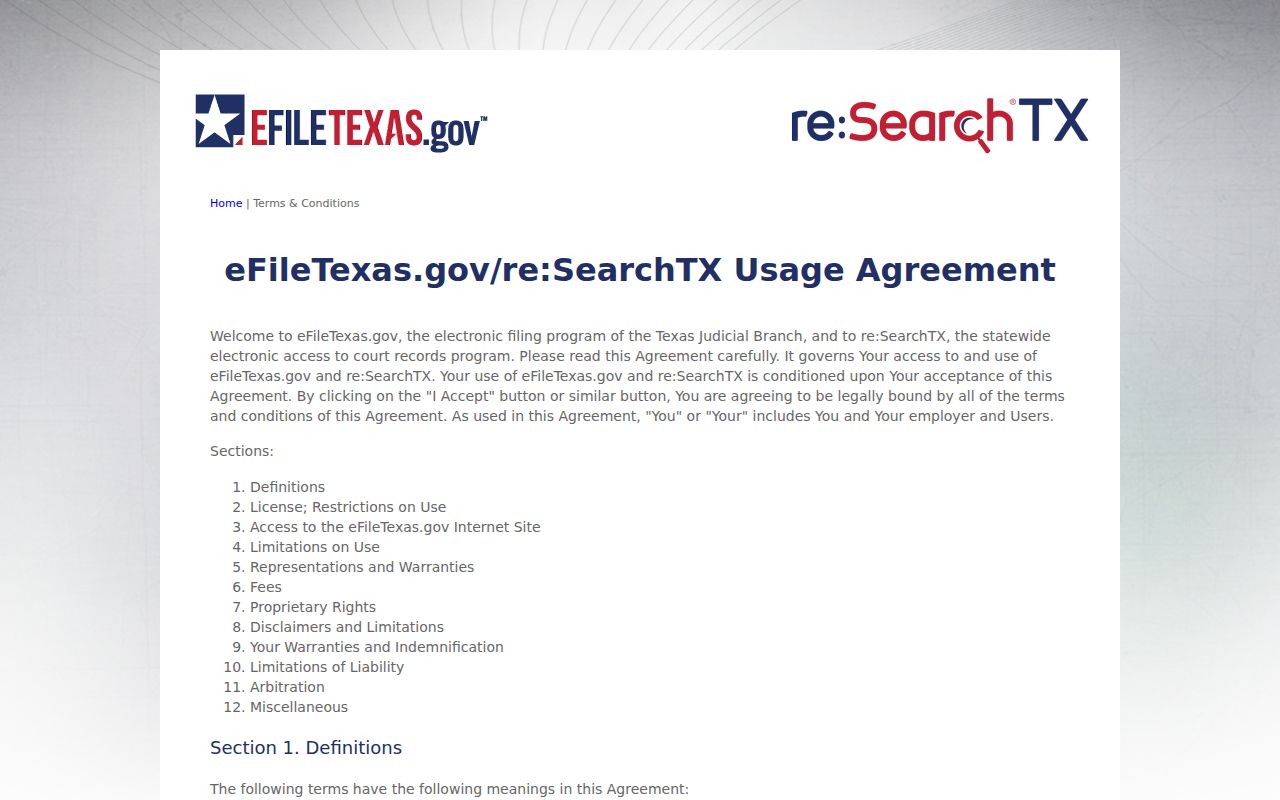
The statewide service publishes terms for its electronic systems.
CARD Is Not Floyd Case Search
CARD comes from the Office of Court Administration. It answers a different question than a docket search. It counts. It lists annual totals for Floyd County and directory facts for each court. Type in a cause number and nothing happens. CARD cannot pull a hearing date, a filed order, or any single case. Fiscal 2024 rows cover district, county, JP, and municipal activity in the aggregate only.
The report fields read beginning status, added, disposed, and end status. None of those are live docket labels. A bigger year-end count does not by itself mean cases are moving slowly. Treat CARD as a tool for scale. Then go to the clerk or re:SearchTX for an actual Floyd County docket.
Here is what fiscal 2024 showed. The Floyd district row listed 209 beginning-status cases and 115 added. It reported 95 disposed and 238 at end status across its categories. Justice Court was far larger. It opened with 2,556 beginning-status cases. It closed at 2,799 across civil and criminal categories. Those totals prove the value of picking the right court first. They still cannot surface a party, a cause number, a setting, a filing, or a result. The reporting year ran September 1, 2023, through August 31, 2024. So it is not a current calendar either.
Which Cases Stay Restricted
Not everything in a court docket is open to everyone. Texas Family Code Chapter 58 locks up juvenile records. Protective-order law can hide addresses and contact details. For sealing civil court records, Rule 76a sets the procedure. A public docket can stay visible. Even so, one attachment may be sealed, redacted, or limited to authorized users.
An empty result does not prove no Floyd County case exists. The search may have hit the wrong court, a mangled cause number, older data, incomplete integration, or a legal restriction. Ask the right clerk what part of the court records can be released. Ask what process governs a restricted request.
Access rule: Texas Rule of Judicial Administration 12 covers defined judicial records; adjudicative files follow other court rules and law.
Floyd County Clerk Check
A failed case lookup is easier to fix when the request is precise. Tell the clerk the court and a properly formatted cause number. Add lawful caption details, an approximate date, and the exact item wanted. Say whether a plain or certified copy is needed. Settle fees and delivery terms before sending payment or anything sensitive.
The District Clerk publishes phone, email, fax, and a counter in Room 207. The County Clerk holds the constitutional County Court files. JP and municipal clerks each answer for their own dockets. No public-terminal policy is confirmed. So call ahead before making the trip.
For a fax, email, or mailed inquiry, state how you want delivery. Say whether payment must arrive first. Local pages promise no same-day response, electronic delivery, or walk-in terminal use. Ask for a specific docket sheet, a named order, or a hearing setting. That gives the clerk a far clearer task than a broad demand for every filing tied to a name.